
Repairing a tank heater
A tank that heats poorly or drips from a valve may only need a part. The plumber checks the thermostat, the relief valve and the fittings first, and says whether repair makes sense.
A heater that has stopped heating, started to leak or reached the end of its life can be handled by a local plumber we connect you with. Tank and tankless units are both repaired, replaced and installed.
A water heater job touches gas or electric supply, water lines and a vent. Installing or replacing a heater needs a permit, and new and replacement heaters get earthquake straps. Both are explained below.
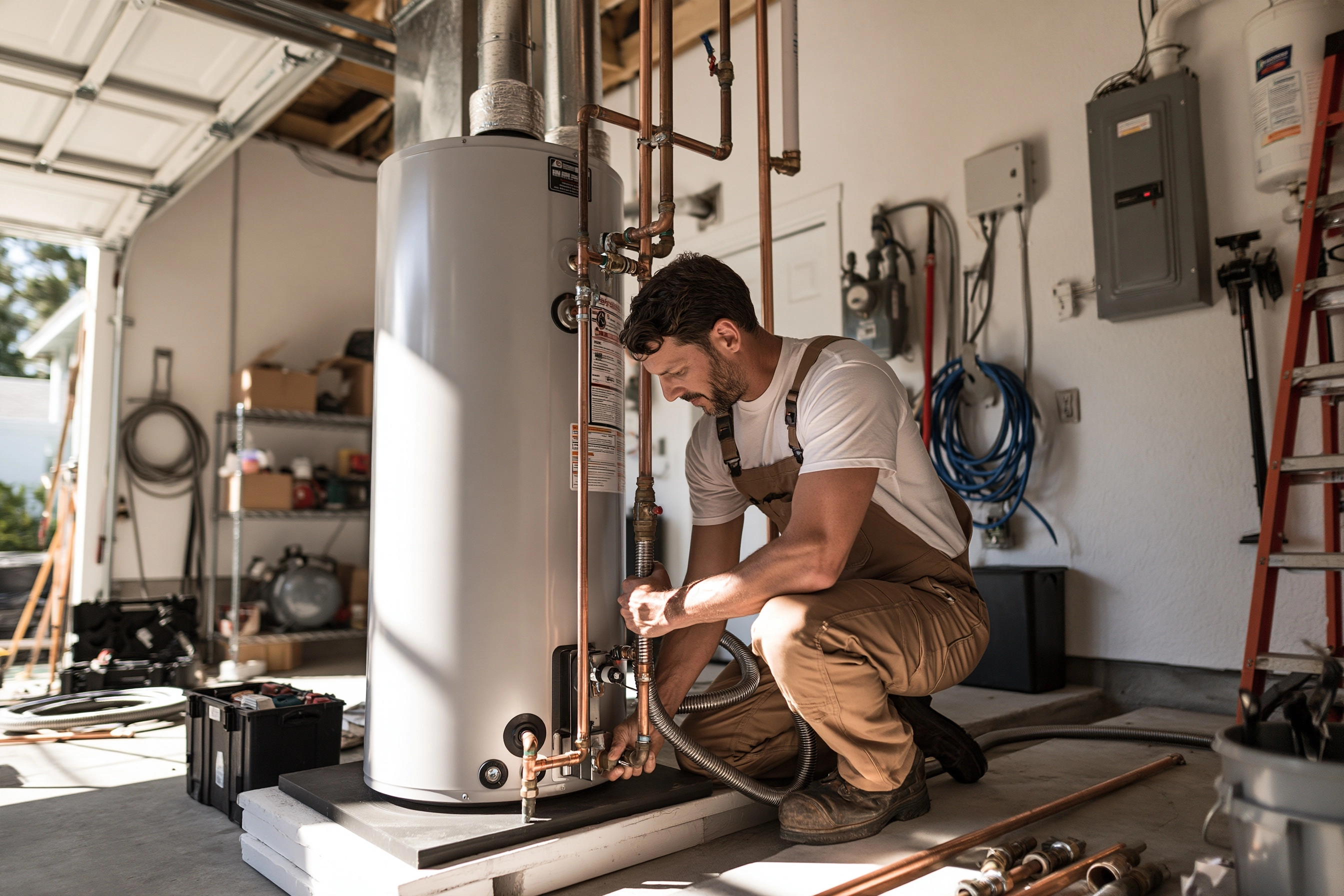
A tank that heats poorly or drips from a valve may only need a part. The plumber checks the thermostat, the relief valve and the fittings first, and says whether repair makes sense.
A tank that has sprung a leak cannot be patched, so the heater comes out and a new one goes onto the existing connections. The new unit is sized to match how much hot water the household draws.
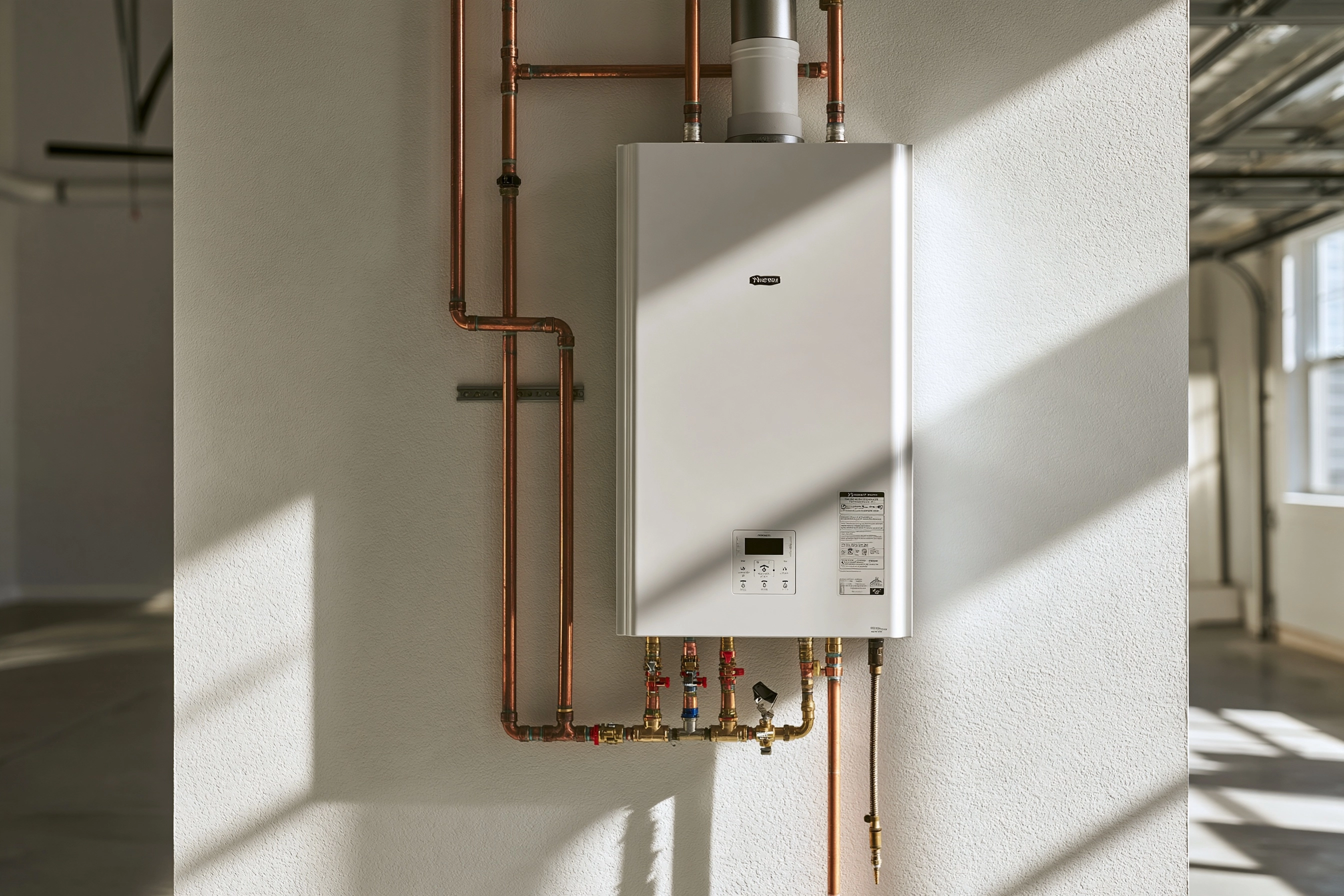
A tank-to-tankless change in the garage can mean different gas or electric supply, a different vent and a unit mounted on the wall. It is a bigger job than a like-for-like swap, and it is planned before work starts.
Relocating a heater or adding a second one means new piping runs between the unit and the fixtures it serves. That changes the piping, which brings the permit question into the planning.
Santee’s plumbing permit names water heaters, tank or tankless, so a swap or a new unit sits inside the City’s own permit line. The California Plumbing Code asks for a permit on any replacement too, which means the two rules point the same direction.
AB 1890, the state law behind this, covers heaters sold in California from the start of July 1991 onward, new or replacement, and calls for anchoring, bracing or strapping. The State expects tank heaters to be held in place so that they cannot shift when the ground moves.
A tank is picked by how much hot water the household uses in its busiest hour, and a tankless unit by the number of fixtures running at once. The water heater size calculator works through both, and the tankless flow calculator shows how a unit’s flow rating holds up.
Serial numbers on a water heater hold its build month and year. The serial number decoder reads that code, so you can weigh another repair against a new unit with the heater’s age in hand.
Water around the unit may come from a pipe rather than the heater, which leak finding checks. A repipe has its own page, and the homepage has our full list.
Call us to discuss your current issue and how we can assist you. The call is free and you get a free, personalized estimate with no obligation. We're here to help.
Call (855) 321-3426